Goddesses Never Die:
Antiquity Across Continents
Time window: ~27 BCE – 476 CE
(Western Roman Empire)
Exploring Han China, Gupta India, Classic Maya, Aksumite Ethiopia, and Sasanian Persia —
with contemporary LA anchor communities including Chinese, South Asian, Mexican/Indigenous, Ethiopian, and Persian LA
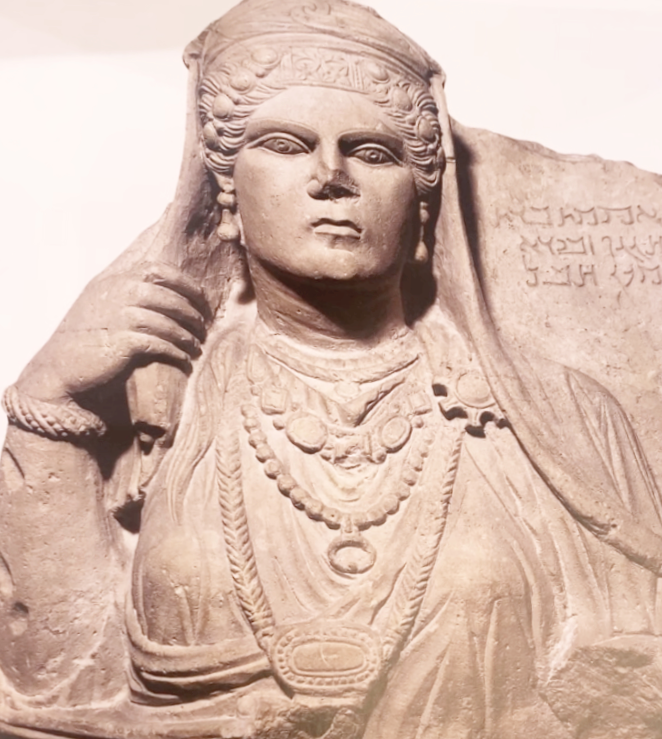
IMAGE SOURCE: British Museum Library. Syrian Funerary c AD 110
Civilizations and food stories
Han Dynasty
Tea cultivation begins (initially medic-inal), soy sauce develops from fermented soybean paste (jiang), and the world's oldest documented wheat noodles (4,000-year-old millet noodles ex-cavated at the Lajia site). The Silk Road opens under Emperor Wu (~130 BCE), beginning the first sustained east-west exchange of foods and culinary ideas.
Classic Maya
South America (~250 – 900 CE):Cacao consumed as a bitter, spiced, frothed ritual beverage (not yet sweetened); maize as sacred staple woven into creation mythology (the Popol Vuh tells of humans formed from maize); the "three sisters" polyculture of maize, beans, and squash; chiles, vanilla, avocado, tomato, and amaranth all cultivated centuries before European contact.
Sasanian
Persia (224 – 651 CE)
Rice pilafs, refined sweets, stuffed dishes; Persian agricultural innovations including the qanat underground irrigation system that made farming possible in arid regions.
China (206 BCE – 220 CE)Gupta Empire
Hindu vegetarian cuisine codifies; the Ayurvedic medical tradition formalizes the relationship between food and health; sugar (Sanskrit sarkara) is cultivated industrially and exported west via Roman trade. Pepper, ginger, and cardamom flow toward Rome; Roman gold flows the other way
India (~320 – 550 CE):Aksumite Empire
Ethiopia/Eritrea (~100 – 940 CE):Teff cultivation — one of the world's oldest domesticated grains, indigenous to the Ethiopian highlands and not widely grown elsewhere; the deep ancestry of injera (sourdough flatbread from teff); coffee in its earliest cultivated forms (the legend of Kaldi the goatherd dates roughly to this region centuries later); Ethiopian Orthodox Christian dietary traditions with extensive fasting periods.
Pacific Polynesia
South America (~250 – 900 CE):Voyaging canoes spread taro, breadfruit, coconut, banana, and pig across vast distances — the longue durée settlement of Hawaii, Aotearoa (New Zealand), Rapa Nui (Easter Island), and other islands runs through this and later periods.
LA Community Connections
Ethiopian and Eritrean LA
Little Ethiopia on Fairfax (restaurants like Meals by Genet, Rahel Ethiopian Vegan Cuisine).
Mexican, Salvadoran, Guatemalan LA
Contemporary maize traditions that trace continuously back to the Classic Maya.
Chinese LA
Monterey Park, Alhambra, San Gabriel Valley
Indigenous LA
Tongva, Chumash, Tataviam, and Gabrielino communities whose pre-contact foodways share ancestry with broader Indigenous American agricultural traditions.
Indian LA
Artesia's Little India and the broader South Asian community.
Persian LA
Tehrangeles in West LA.